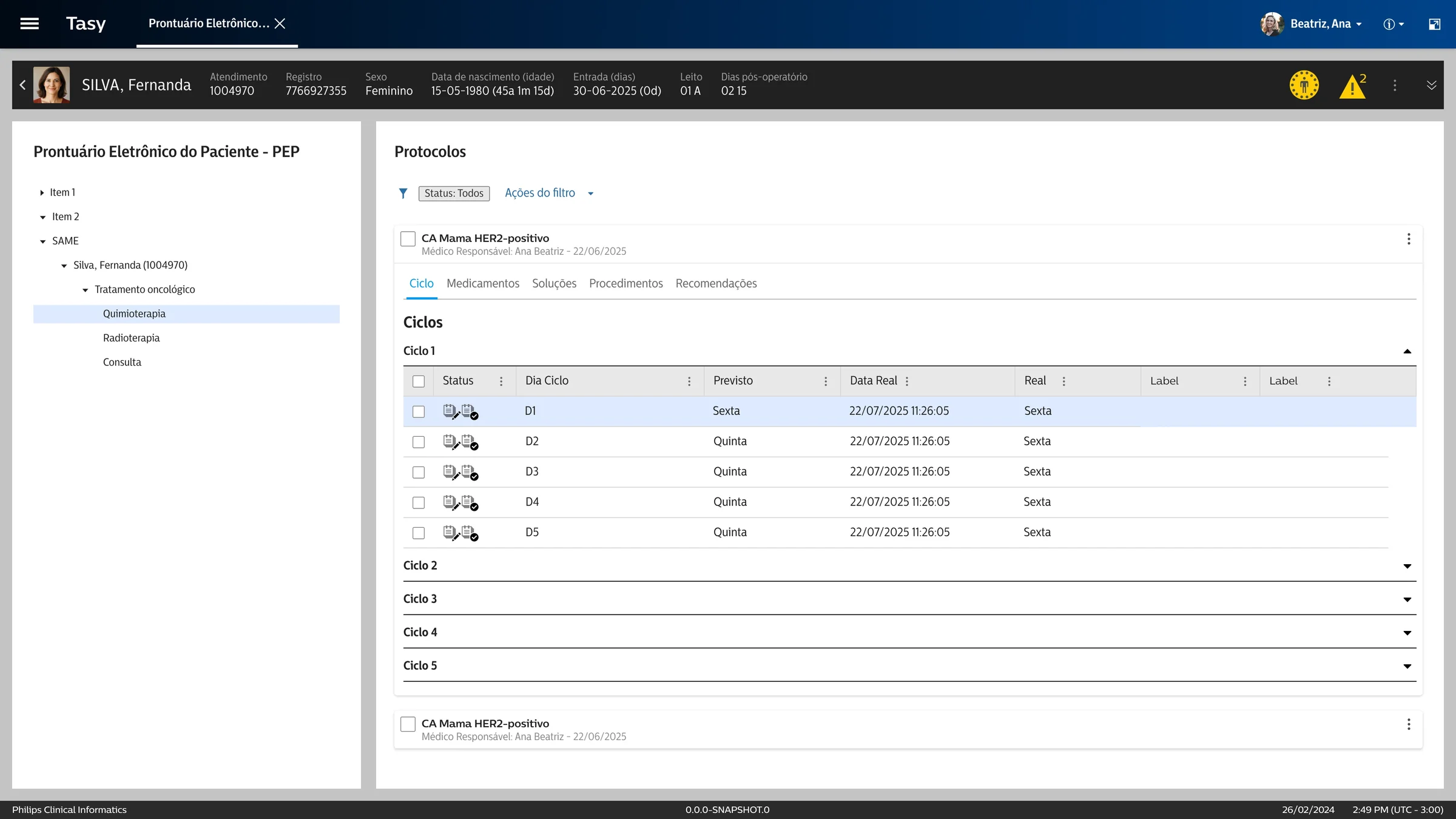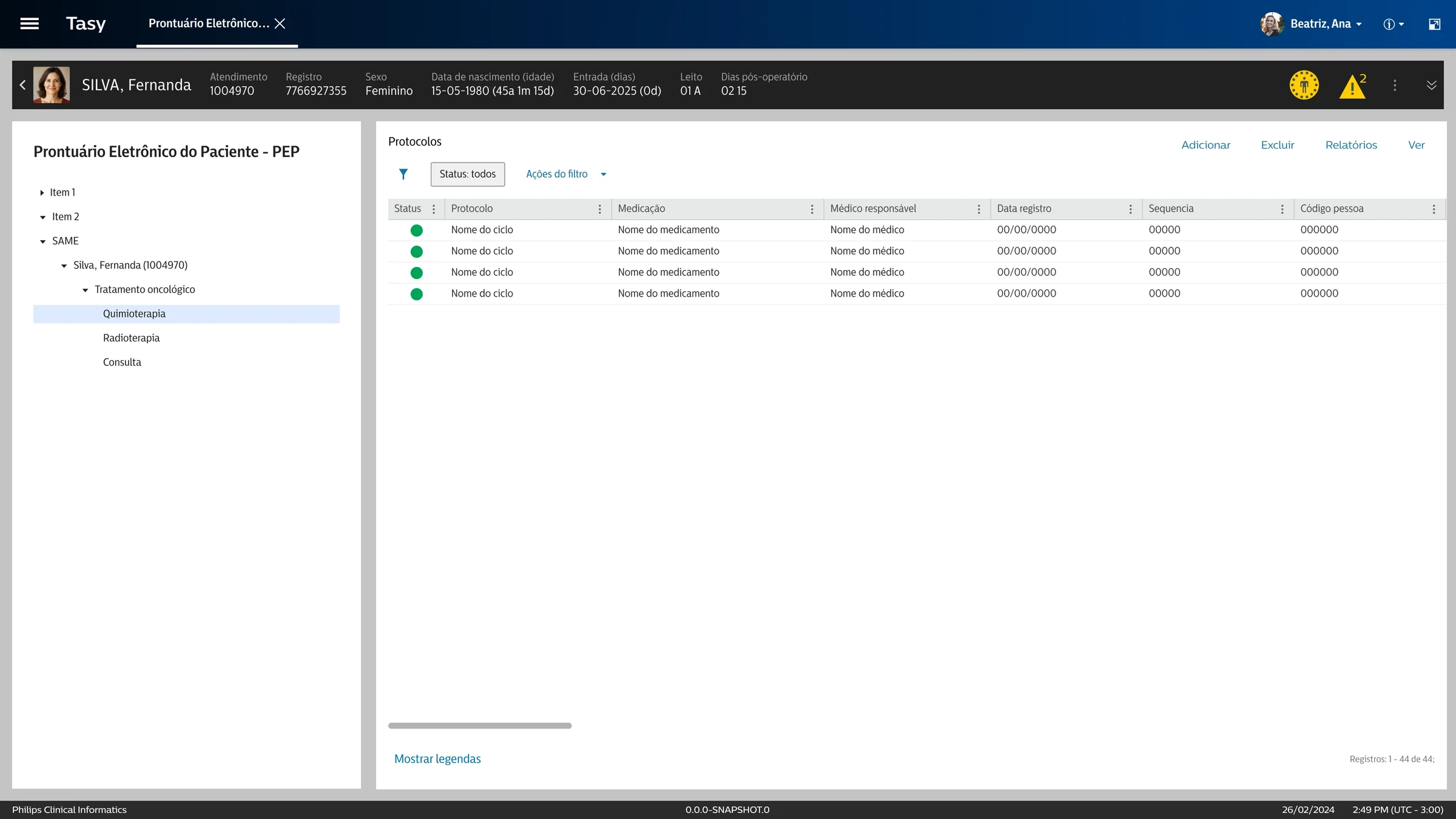




From a manual document to a digital workflow that sustains R$1.49 billion in rural credit.
How I redesigned, from scratch, Sicredi's Technical Rural Project process, turning a fragmented form, rebuilt by every cooperative in its own way, into a single platform used by thousands of technicians, cooperatives and producers across Brazil.
- Duration
- 2017 – 2019
- My role
- Lead Product Designer
- Product
- Protec Agro (Sicredi)
- Domain
- Agro · Rural Credit · SaaS
- Team
- 1Product Designer1Product Owner2Business Analysts4Developers 1Tester2Rural Credit Specialists1Scrum Master
Context
A national financial system made of independent cooperatives.
Sicredi is a cooperative financial institution: its members are also its owners, and each cooperative is run locally, close to the communities it serves. In 2018 the system had 116 cooperatives, more than 3.9 million members and over 1,600 branches across 22 states and the Federal District.
Rural credit sits at the heart of that business. For producers, it is the money that pays for seeds, inputs and services before planting. Every operation needs a Technical Rural Project, prepared by an agricultural technician and approved by the cooperative.
- 3.9M+MembersProducers and account holders who own the cooperatives
- 116CooperativesLocal, autonomous, each with its own way of working
- 5Central cooperativesRegional coordination and supervision
- 1Sicredi (CAS)Confederation and Cooperative Bank: shared services, products and risk
The challenge
A critical process was still being built manually.
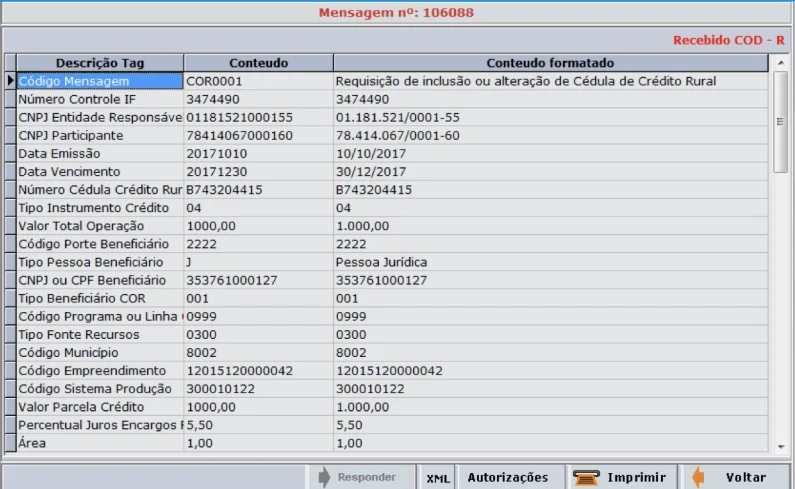
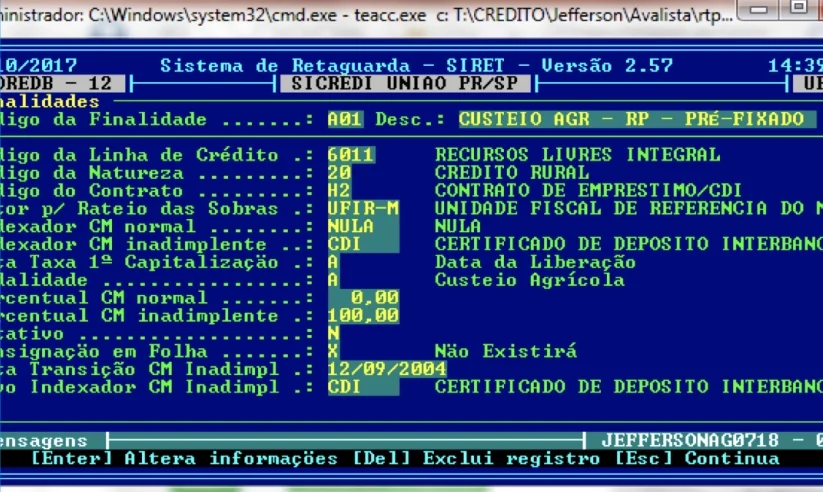
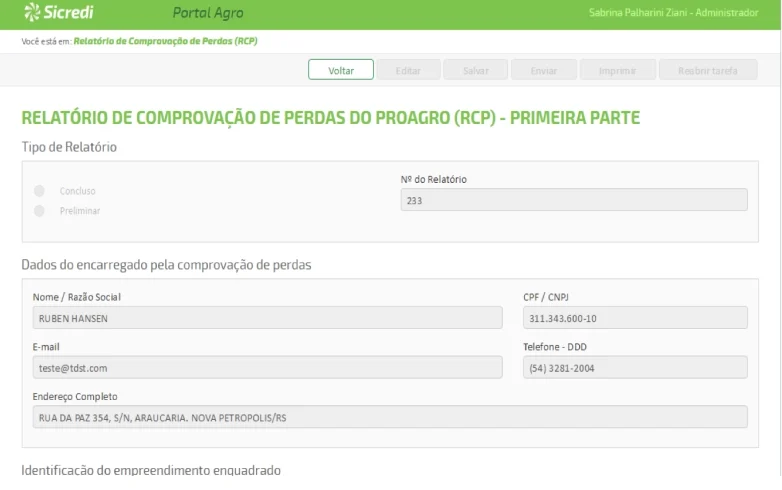
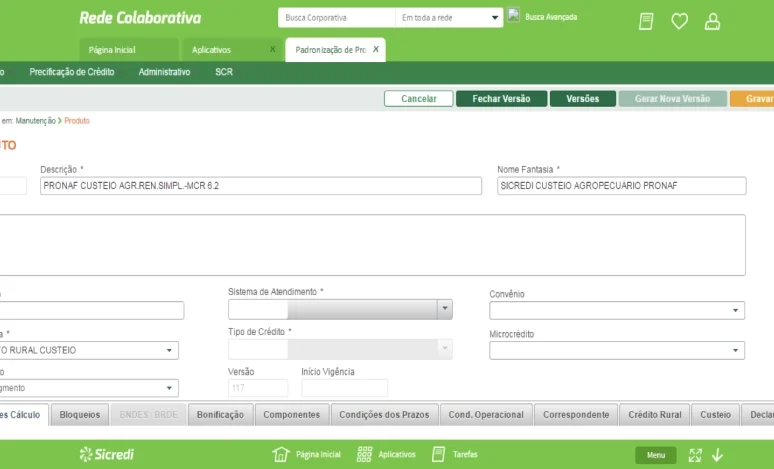
Every Sicredi cooperative created its Technical Rural Credit Projects its own way, in isolated tools, many running outdated technology, with no data structure or reusable history.
The result: constant rework, zero visibility into project status, and delays releasing funds to rural producers who depended on this credit to plant their crops.
- Manual creation, no standard across cooperatives
- No centralized visibility into status
- Constant operational rework
- Data from previous projects lost
- Delays releasing funds to producers
My role
The sole product designer, from discovery to final interface.
I was directly responsible for UX decisions and information architecture within a multidisciplinary team, with no other designer to share scope.
- Led discovery with cooperatives, technicians and external partners
- Mapped journeys and personas for the 4 user profiles
- Translated 148 user stories into product architecture
- Designed wireframes, prototypes and the final interface
- Ran usability tests and iterated based on real-world use
Method
From 47 business opportunities to 148 mapped user stories.
- 01
Kickoff & context
Immersion in the Rural Credit business with business areas, cooperatives and external partners.
- 02
Personas & journeys
Mapping of the 4 profiles involved and the specific journey of each within the same process.
- 03
Story mapping
Translating business complexity into 148 stories: 104 user stories and 44 technical stories.
- 04
Wireframes & prototypes
Information architecture and flows validated before any visual decision.
- 05
Real-world testing
Validated on cooperatives' real laptops, not on agency reference screens.
Product inception
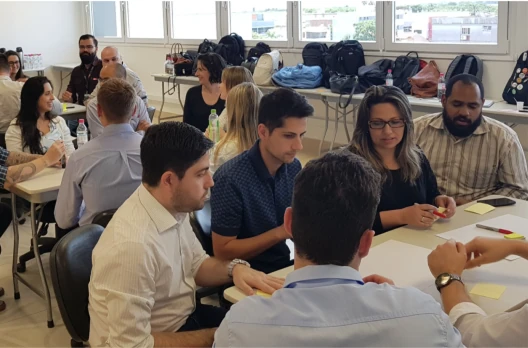
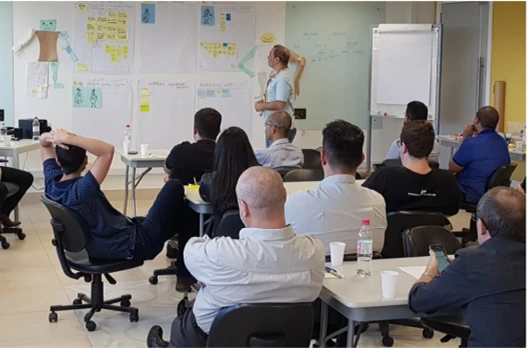
Personas
Built in group dynamics with the people who live the process every day, one board per profile: who they are, what they need, and what gets in their way.
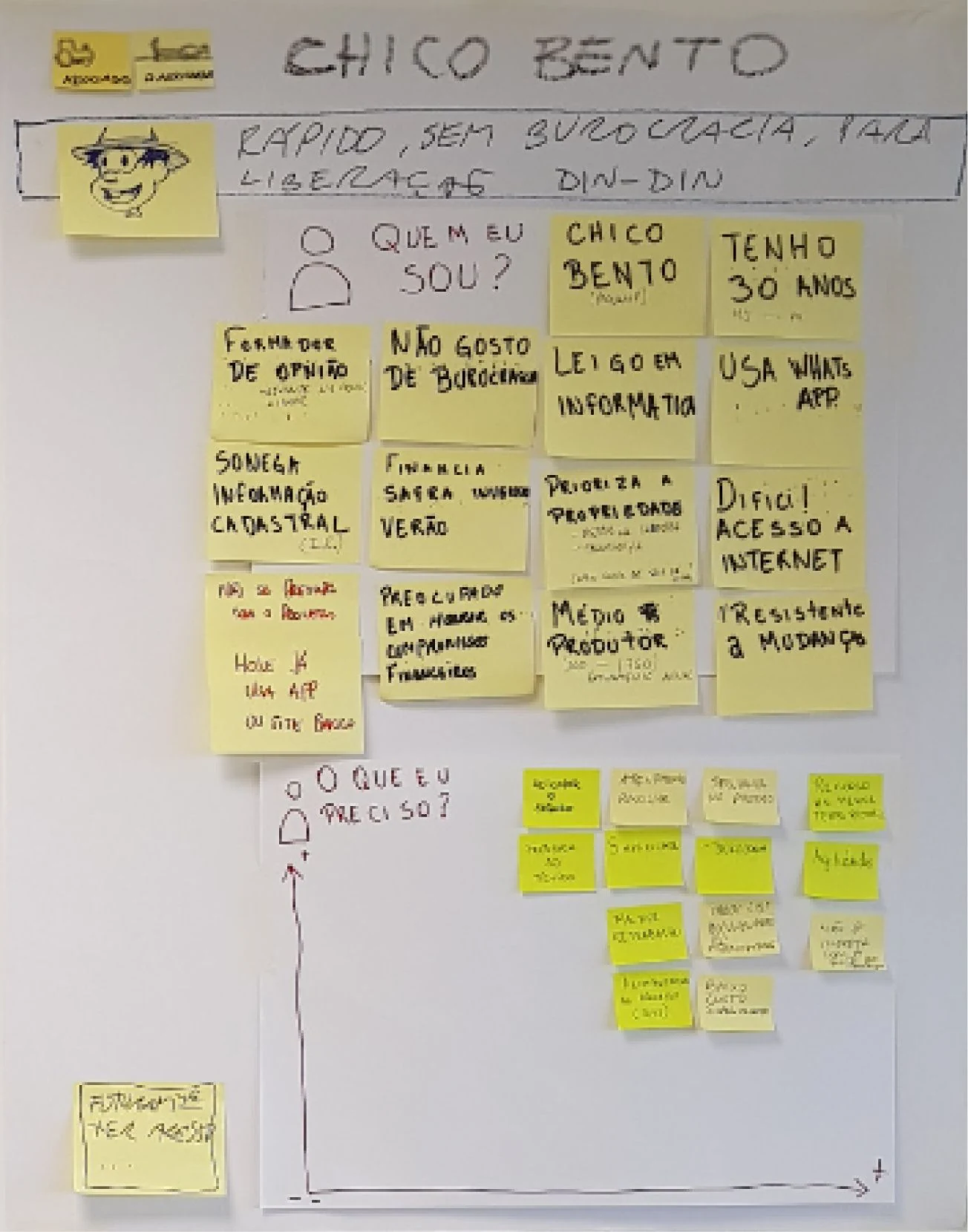
Associate
“Fast, no red tape, to release the money.”
The rural producer requesting financing.
NeedsA fast, simple process with minimal bureaucracy and quick access to resources.
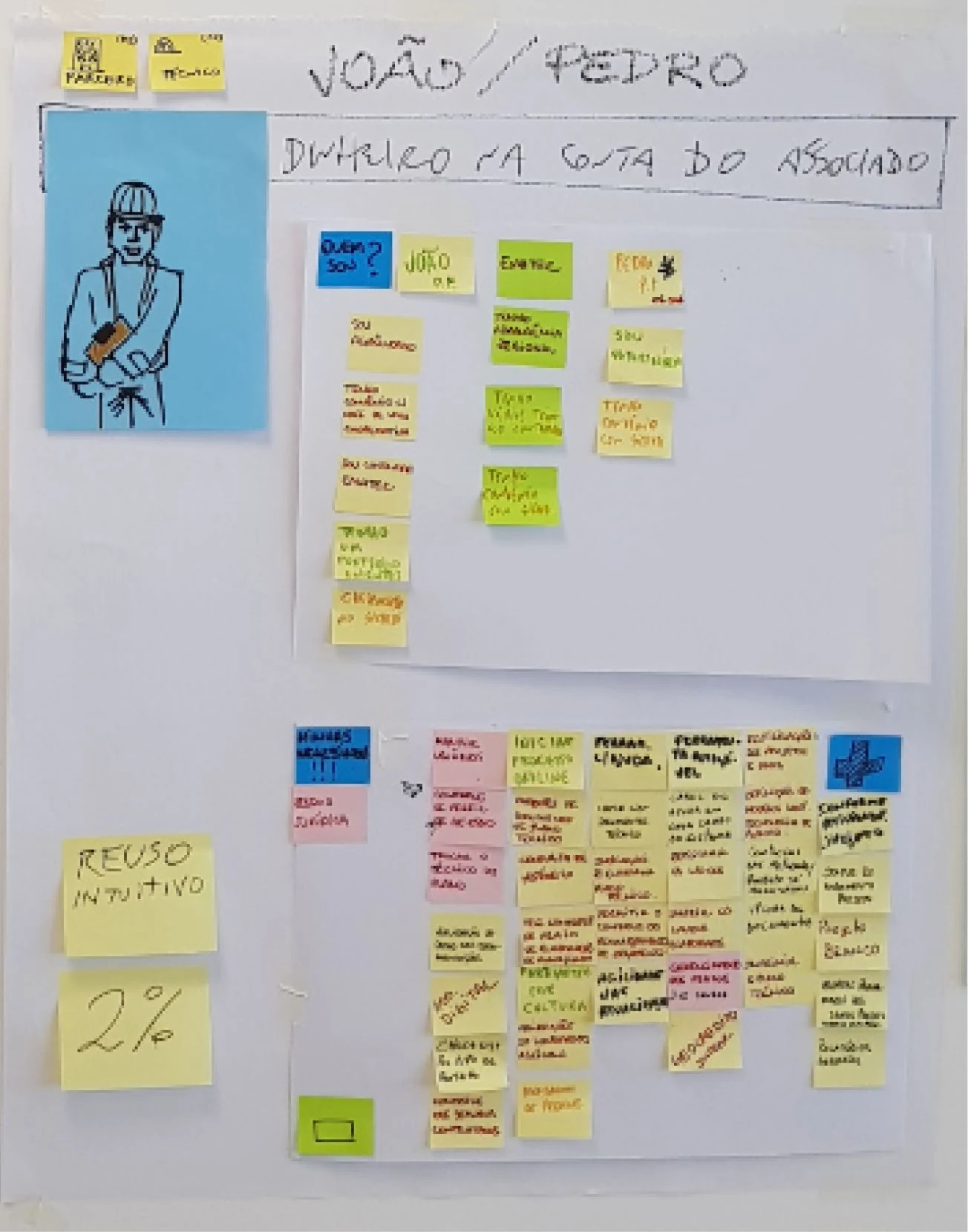
Technical Expert
“Money in the associate’s account.”
Responsible for preparing the Technical Rural Project and providing the required technical information.
NeedsAn efficient way to create, manage and submit the project.
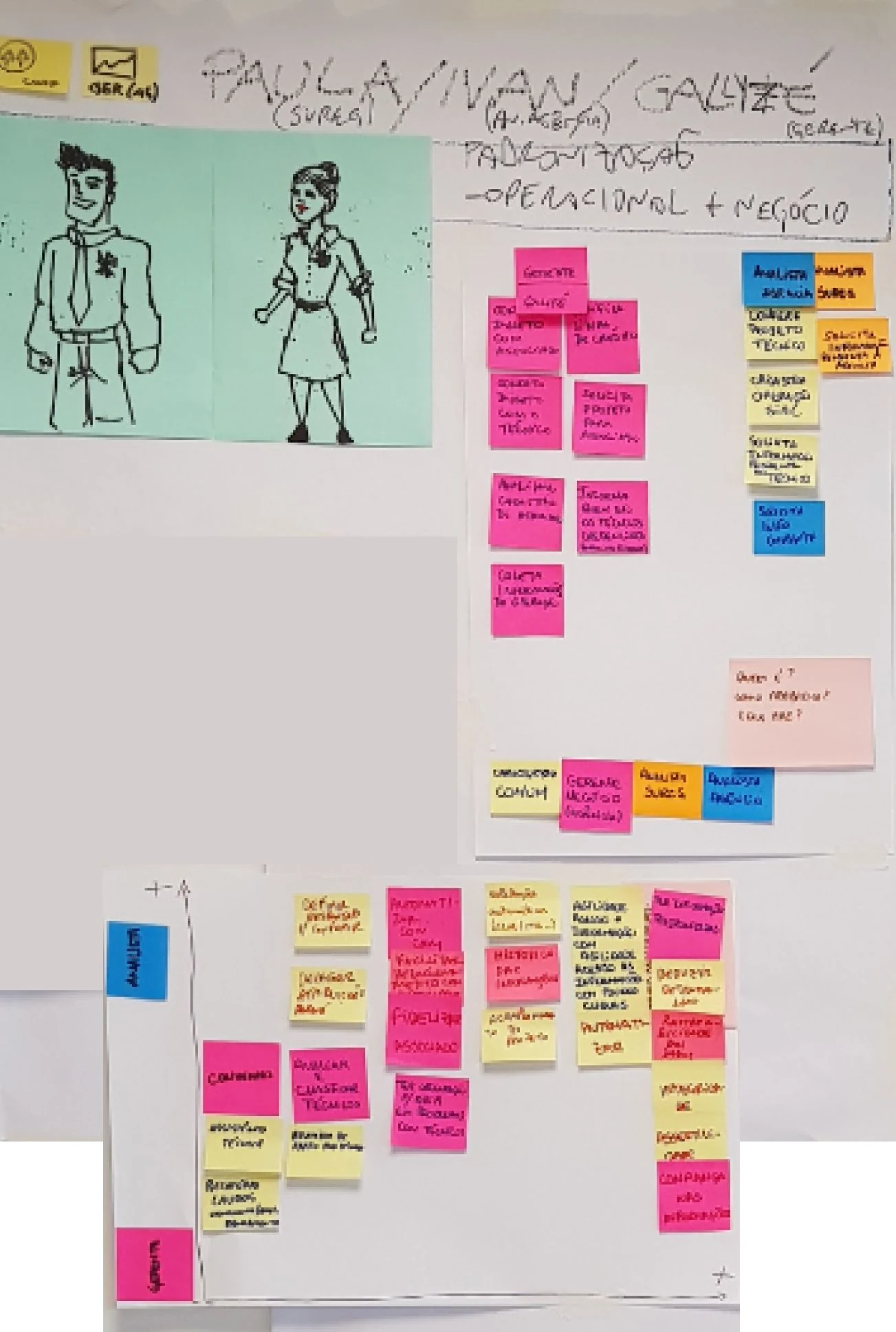
Cooperative
“Standardization: operations and business.”
Responsible for managing and reviewing the financing operation.
NeedsStandardized information, greater visibility and less operational effort.
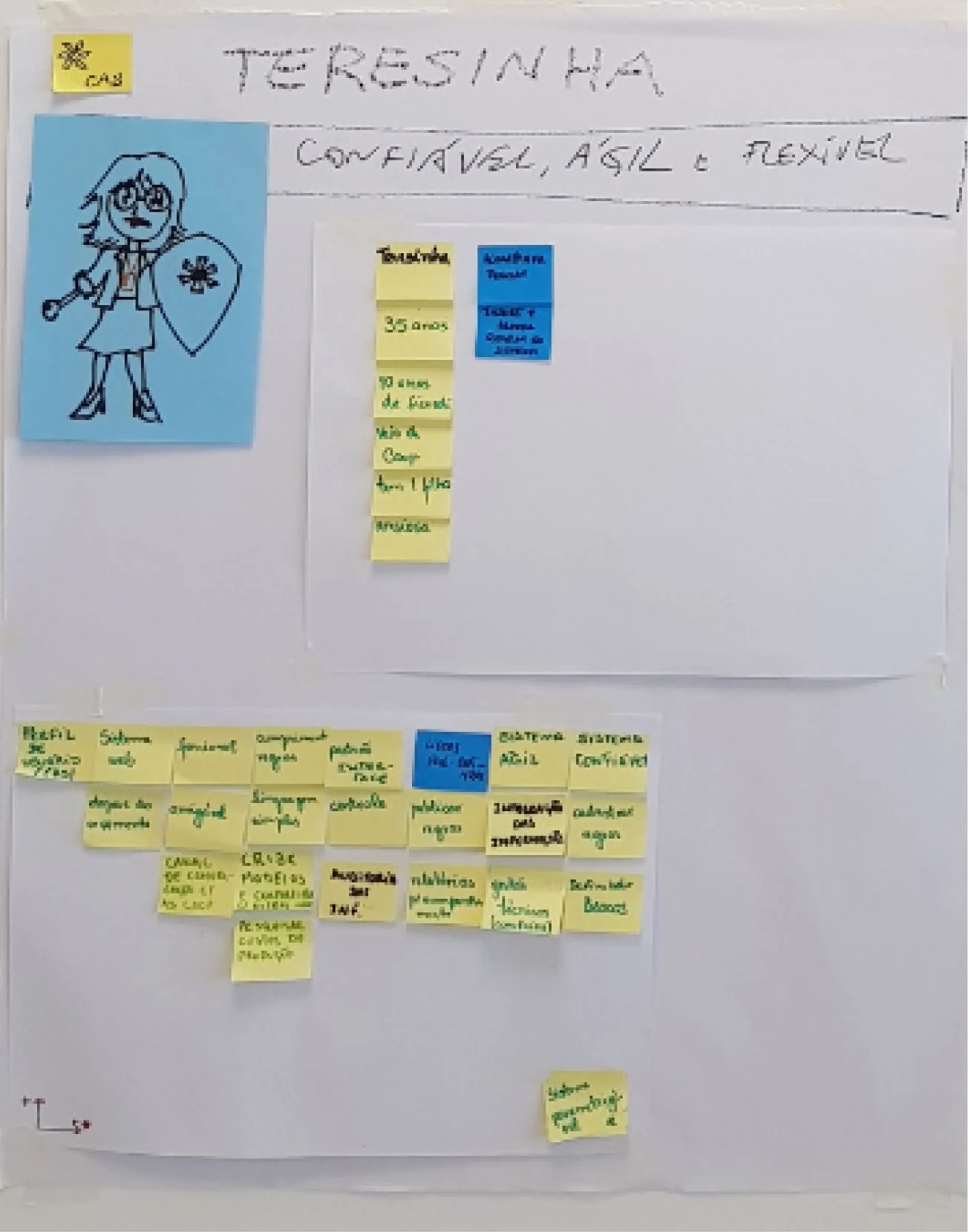
CAS
“Reliable, agile and flexible.”
Sicredi's central Rural Credit area, responsible for overseeing operations across the cooperative system.
NeedsA reliable, agile and flexible process with visibility and control across the system.
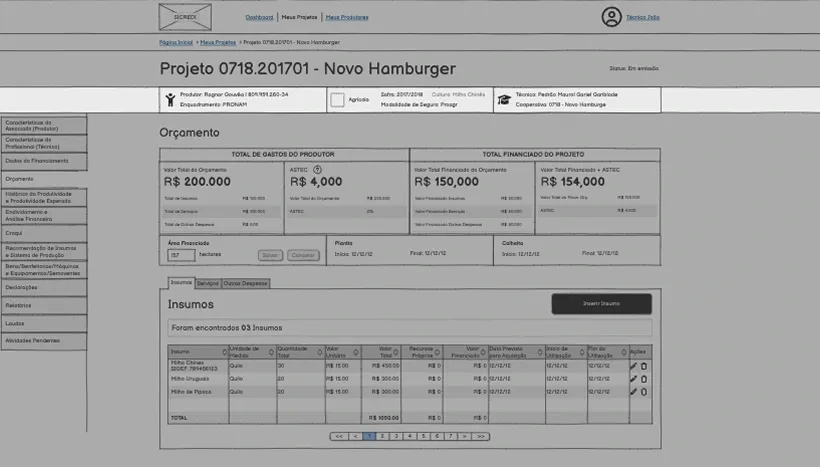
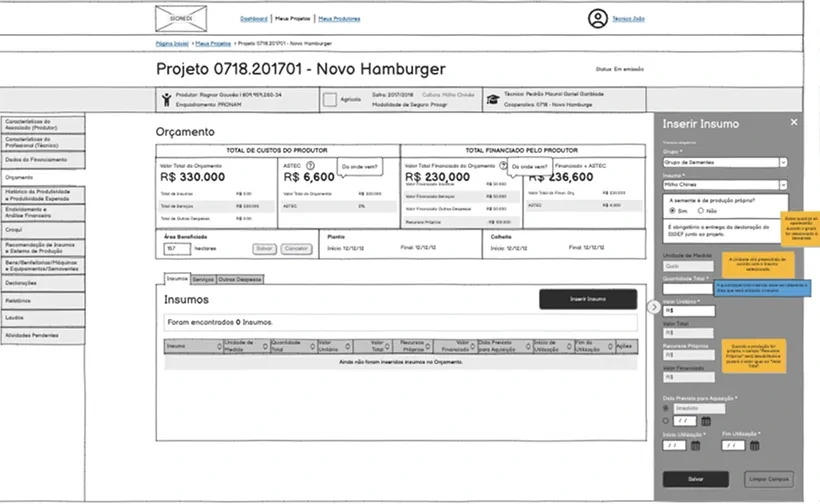
Wireframes
Styleguide
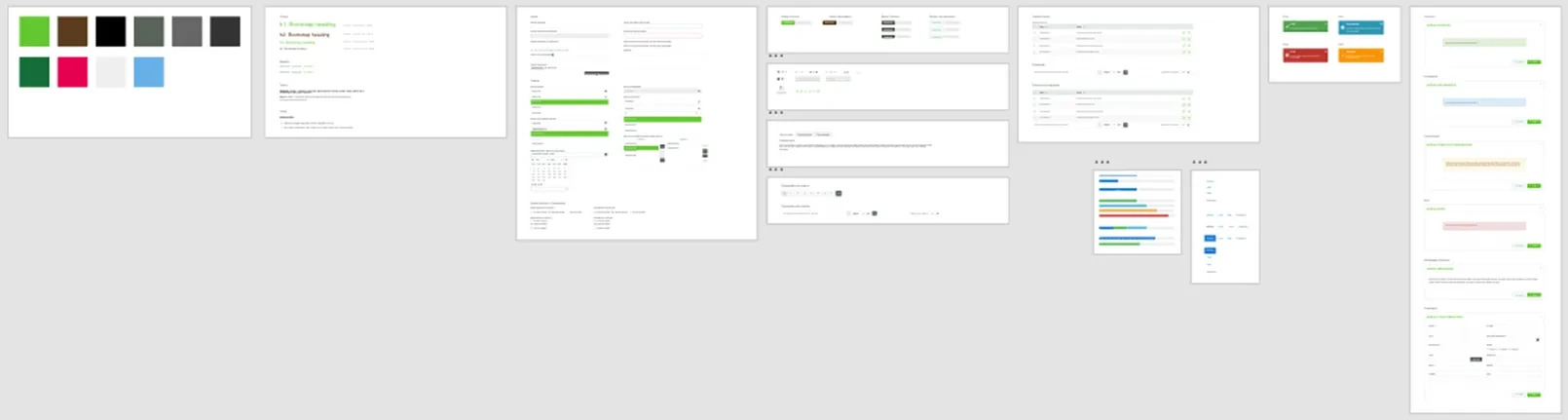
The Technical Project wasn't a form. It was a process shared by four actors with completely different access levels and responsibilities.
The solution
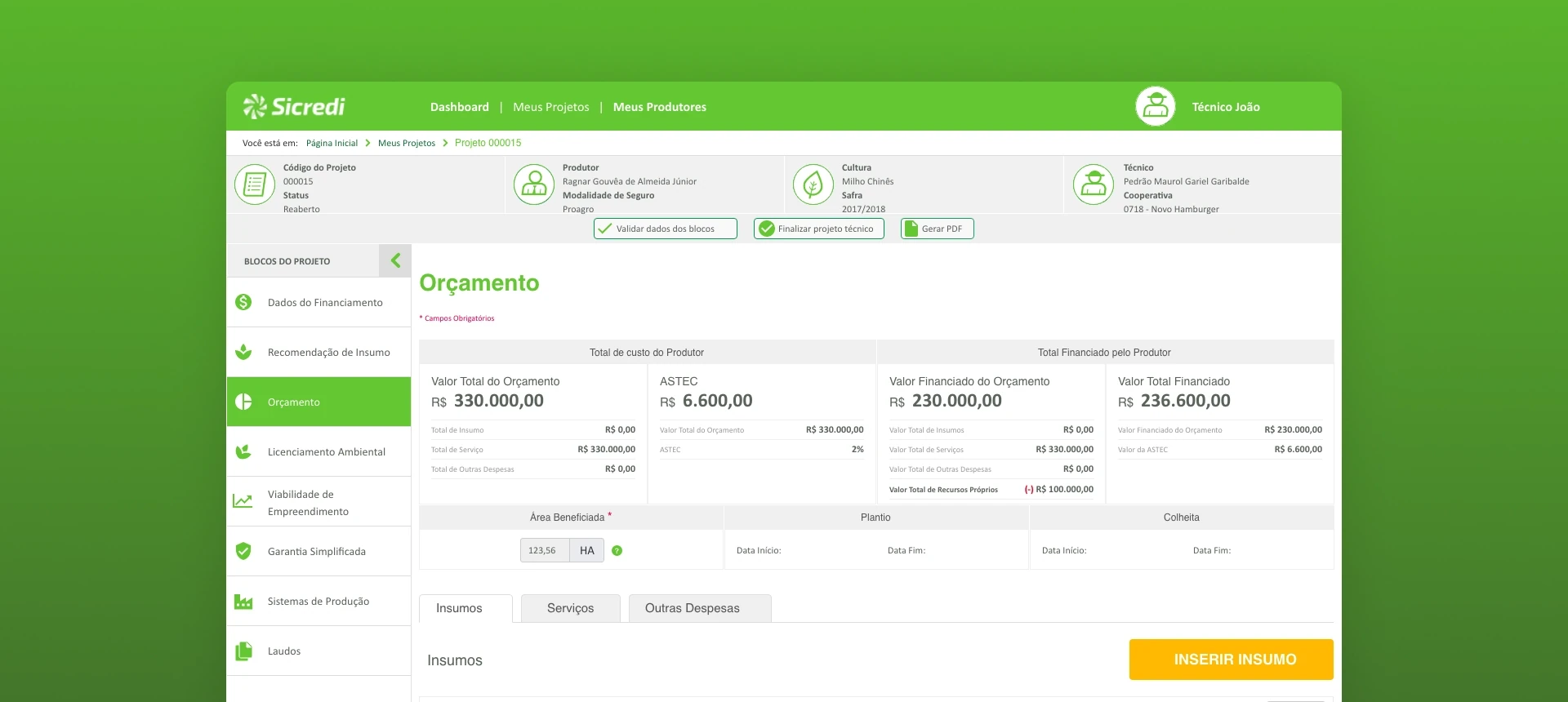
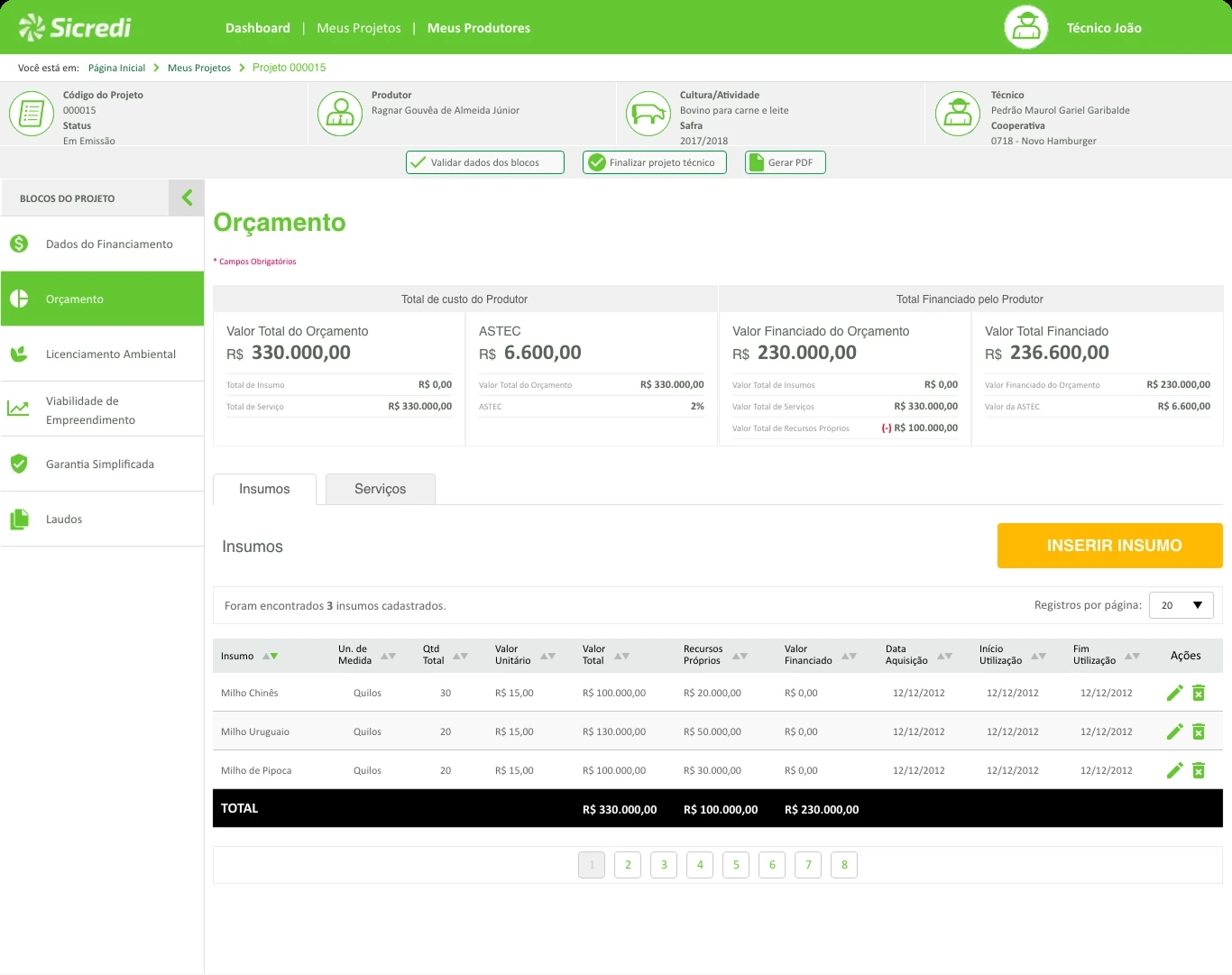
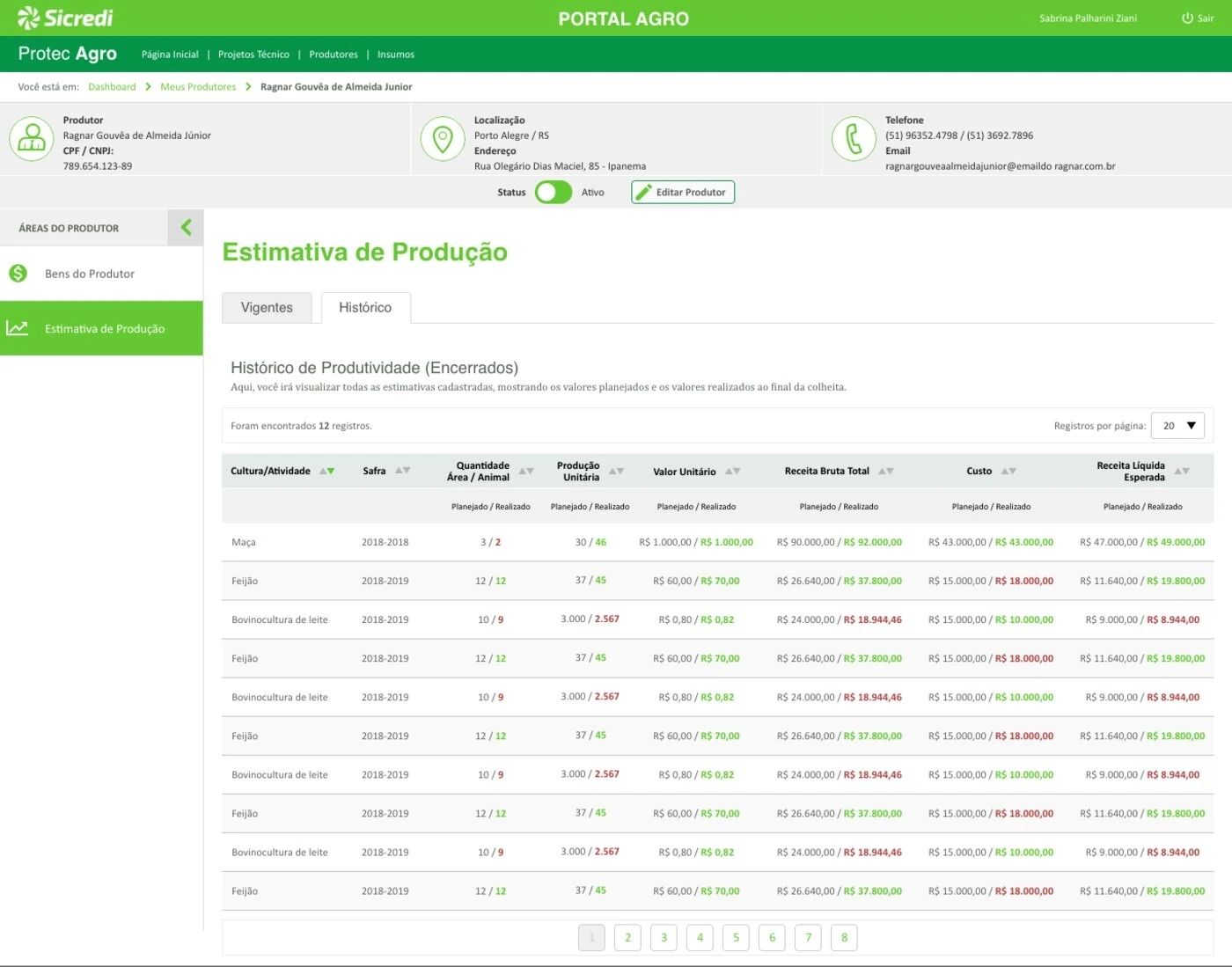
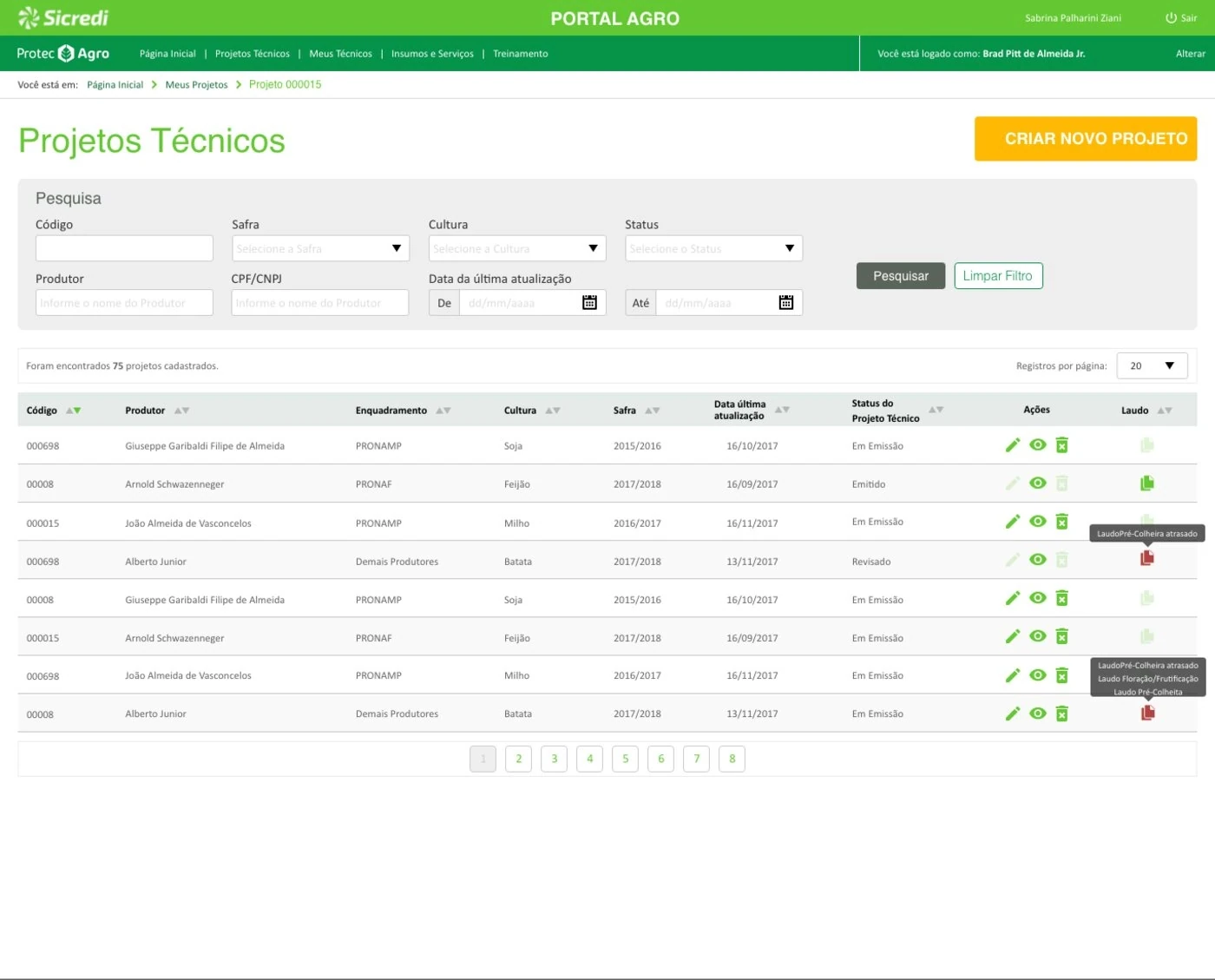
A rural project broken into structured blocks, no longer one continuous form.
Protec Agro split the Technical Project into independent modules (associate data, budget, feasibility, environmental licensing, among others), reducing cognitive load and enabling data reuse across blocks.
Design decisions
Three decisions that sustained the product at scale.
Designing for data reuse, not just for the screen
- Problem
- Information already captured in previous projects was re-entered from scratch on every new project.
- Decision
- Create an Associate module that stores data entered by both the Cooperative and the Technician, reusable in the future.
- Outcome
- Less repeated data entry, less human error, and a structured database for future analysis.
Standardization without rigidity
- Problem
- Regional requirements varied across cooperatives: crops, financing ranges, technology.
- Decision
- Allow each Cooperative to configure project parameters while keeping a standard structure underneath.
- Outcome
- A single architecture sustaining hundreds of different regional configurations.
Access designed around responsibility
- Problem
- Four user profiles, four completely different information needs.
- Decision
- Structure access by role: CAS sees everything, the Cooperative sees its network, the Technician sees their associates, the Associate sees their own operation.
- Outcome
- Each profile sees exactly what it needs: less noise, less operational error at scale.
Learnings
What we only discovered by testing with real users.
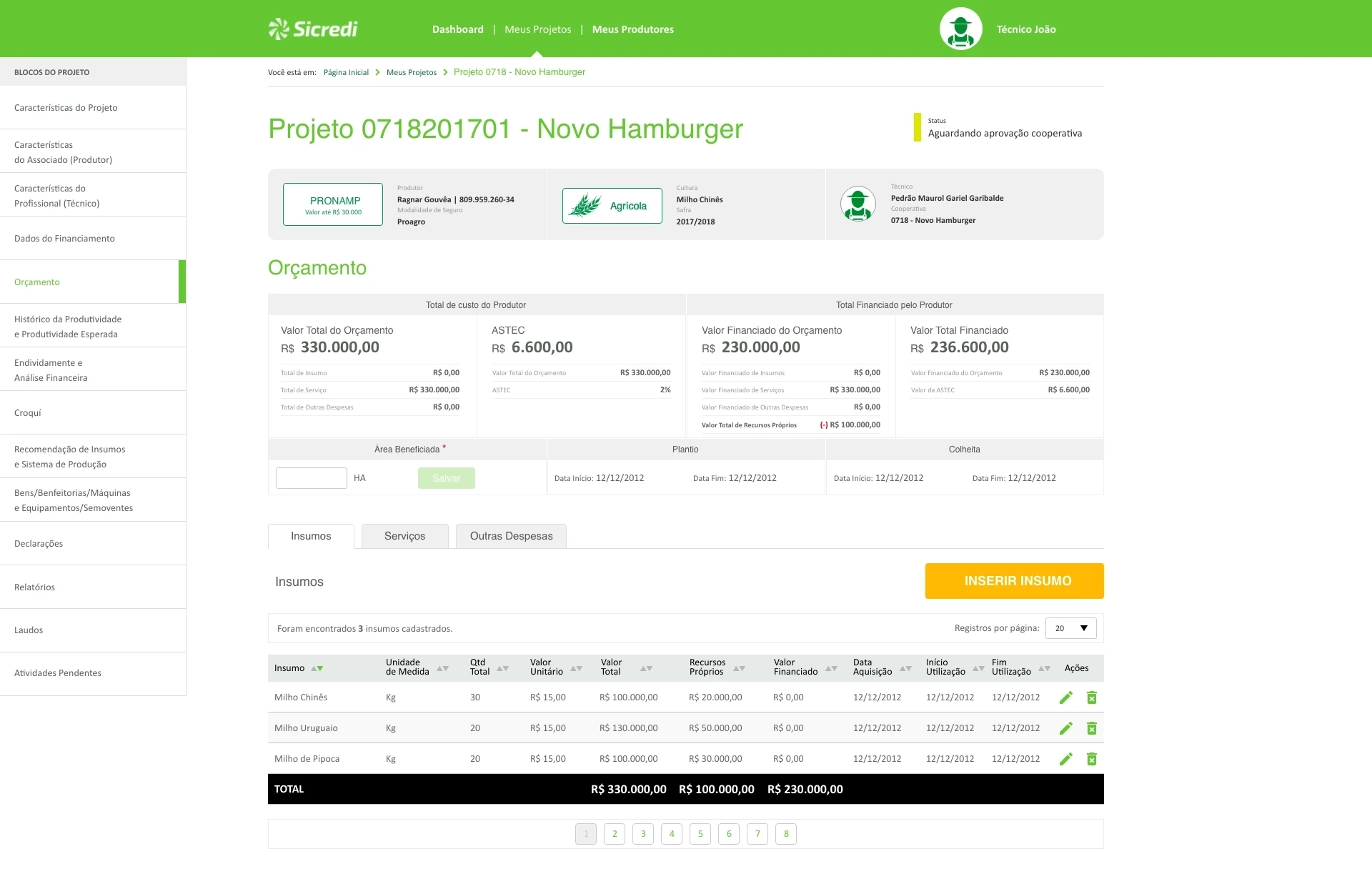
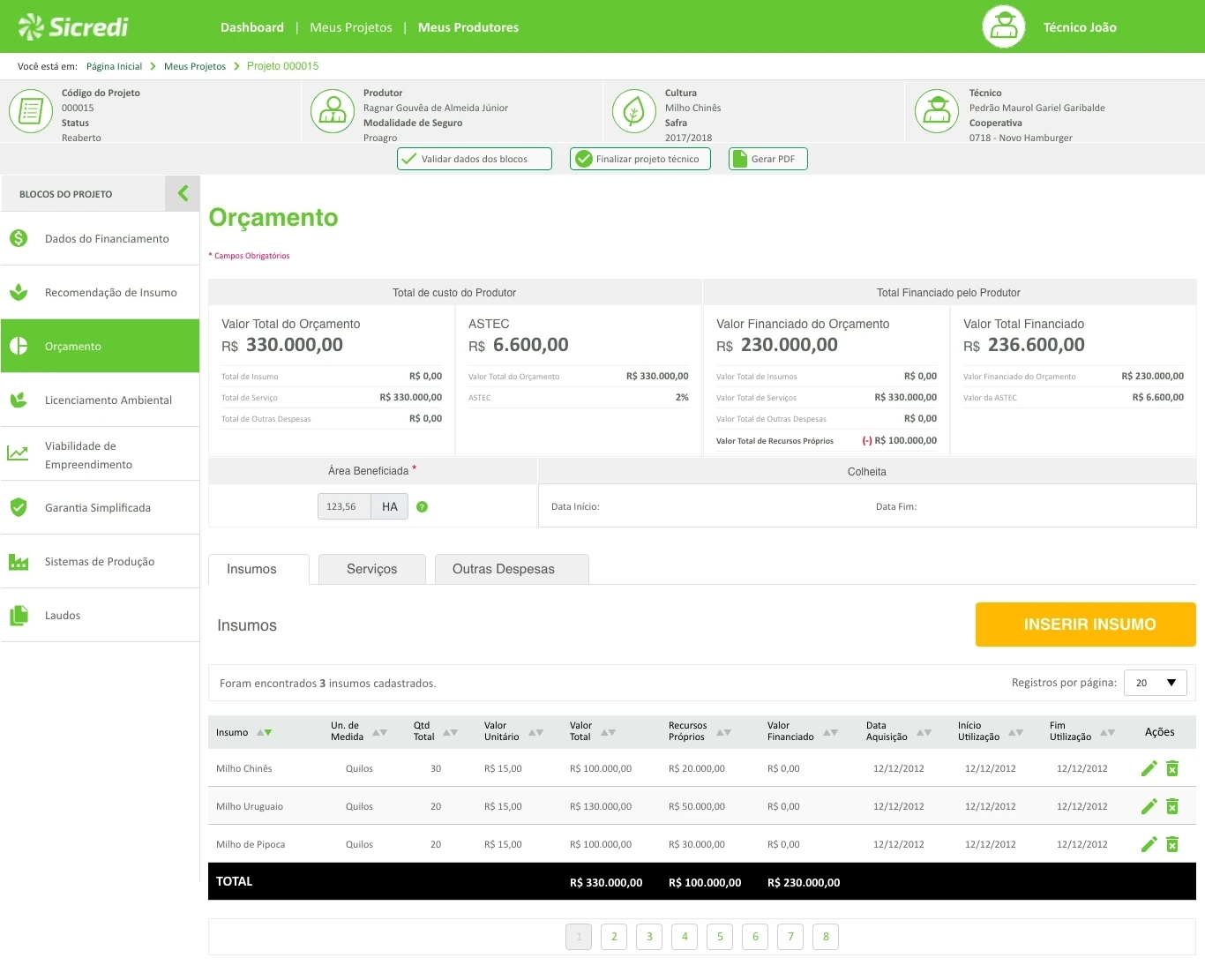
01The design didn't fit the user's screen
We designed the screens at 1920px wide. But cooperatives mostly worked on laptops with factory-default settings at 1366px, the most common resolution in Brazil. We found this out in the very first round of testing, and adapted the entire interface to that real resolution.
02Modals hid the information users needed
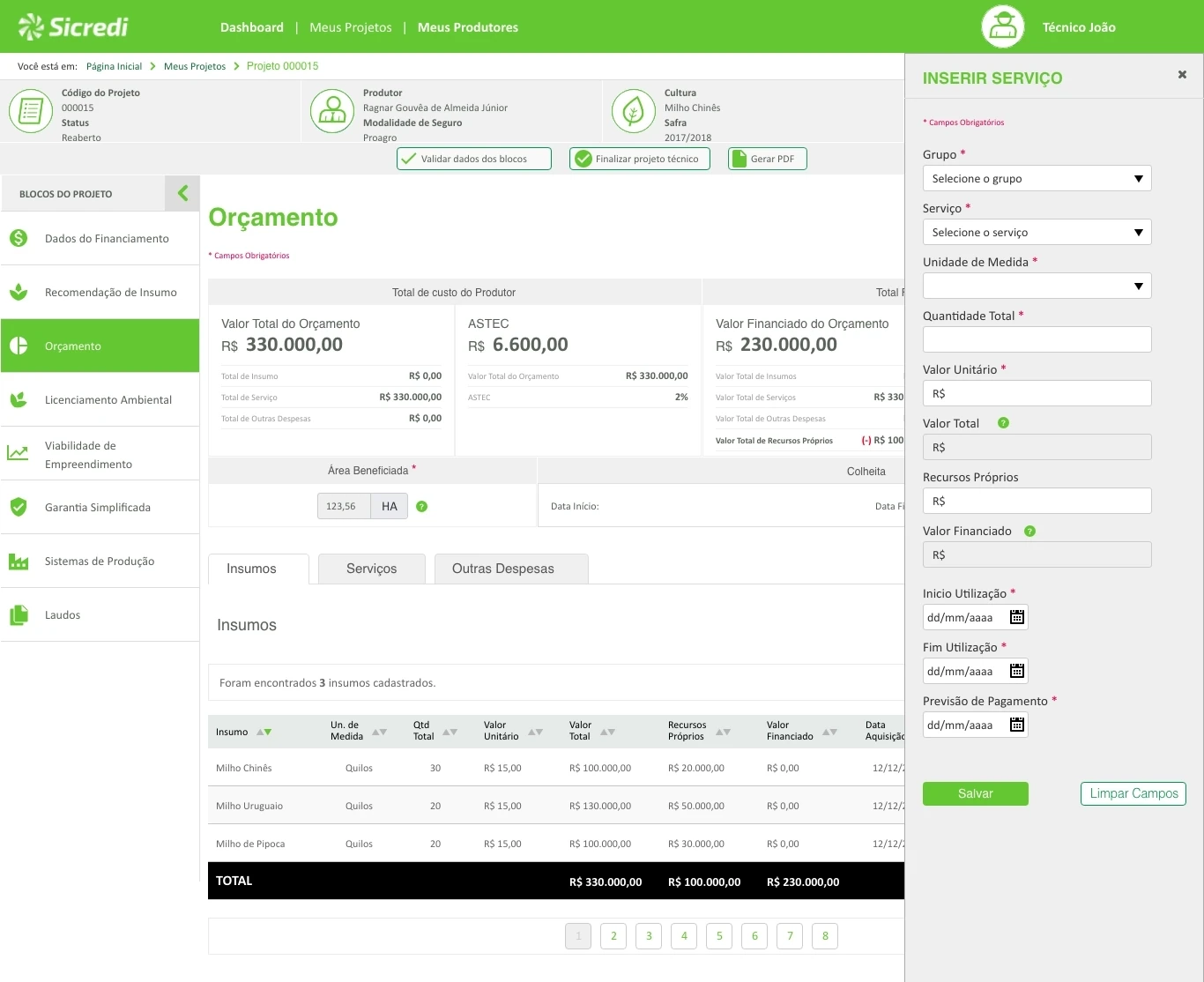
Users needed to reference data already shown on screen to complete or calculate a new entry. The modals we used hid exactly that reference. We replaced them with sliding side panels that keep context visible while the user enters new data.
03The original training plan didn't scale
The initial request was extensive documentation: screenshots, detailed descriptions of every feature, and step-by-step instructions for every screen. After reviewing previous training materials, it became clear that producing and keeping this updated with every new release would be unfeasible for the team.
Extensive written documentation, screen by screen, with screenshots and detailed step-by-step instructions.
Didn't scale with the release paceShort, narrated videos, organized by product section, available on demand inside the system itself.
Impact
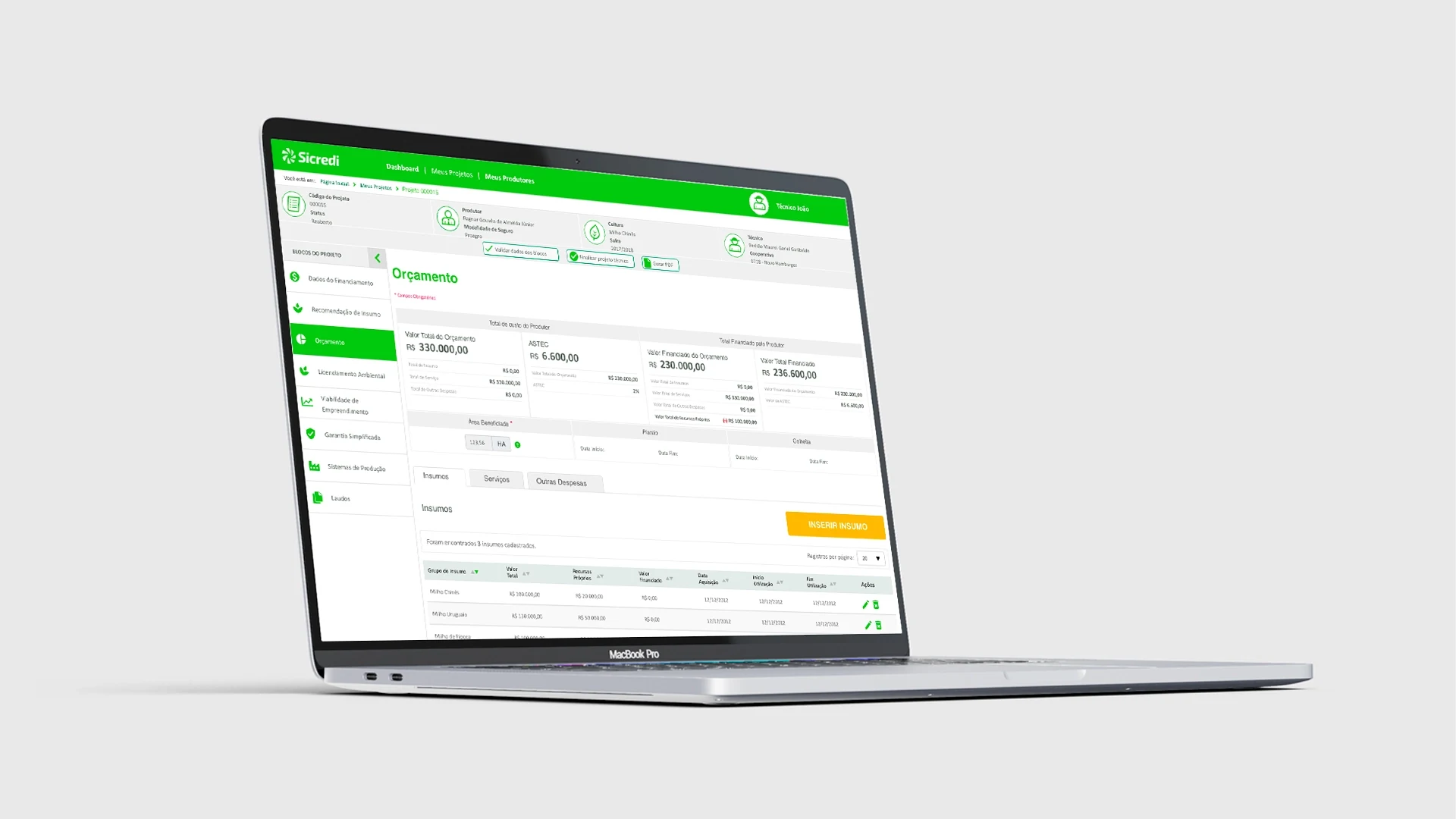
From a manual document to a product at national scale.
- Manual project creation
- Fragmented information
- No standardization
- Constant rework
- Zero visibility
- Structured digital workflow
- Reusable data across projects
- Standardized project blocks
- Access defined by responsibility
- Explicit status per profile
Results
Two years from launch to national adoption.
Protec Agro goes live for Sicredi cooperatives, technicians and producers.
Accelerating rural financing at scale
- R$1.49B financed through the platform
- 8.7K+ producers onboarded
- 1.2K+ active technicians
Expanding the product ecosystem
- Vehicle financing
- Compliance & inspection
- Process standardization
- Investment solutions
- Directed credit lines
- Credit bureau integration
- Classification engine
- External data inputs
Strong adoption and outstanding satisfaction
- Near-total cooperative approval
- Rapid adoption within the first two years
- Exceptional NPS of 96
- High satisfaction within the Training Department
Scaling project delivery efficiency
- 20K+ projects created in just two years
- 3× increase in productivity over the same period
Enterprise product design is rarely solved on the screen. The real work is structuring how people, rules and data intersect.
Next steps
A foundation for the rest of the Rural Credit ecosystem.
Protec Agro's modular architecture was designed to sustain scenarios beyond the initial scope. After launch, it became the foundation for new fronts across the ecosystem:
- Vehicle Financing
- Compliance & Inspection
- Process Standardization
- Investment Solutions
- Directed Credit Lines
- Credit Bureau Integration
- Classification Engine
- External Data Inputs